



Having home health care arranged for your loved one can bring some relief, especially when you’ve been helping them manage their daily needs. As their first visits approach, you may wonder who will come to the house, what kind of assistance they’ll receive, and how their usual routine might change.
During the first week, you can expect to become more familiar with the care professionals involved, the services included in your loved one’s care plan, and how visits will be arranged. The exact experience depends on their health needs and their physician’s recommendations.
It helps to prepare a few things beforehand and talk with your loved one about what makes them comfortable. Their preferences matter, whether it’s the time they usually get ready in the morning or how they prefer to receive assistance with personal activities.
At Buckeye Home Health Care, we understand that welcoming care professionals into your home is a personal experience. We work with your loved one’s physician to plan care around their medical needs while respecting the routines and independence they value.
1. Getting to Know the Care Professionals
Meeting someone who will help with personal or medical needs can take some getting used to. Your loved one may want to know who will be visiting and what each person will be helping them with.
Before care begins, you can ask about the professionals assigned to your loved one’s care and the services they’ll provide.
At Buckeye Home Health Care, we believe that familiar routines and clear communication help make receiving care at home more comfortable. Our care team includes skilled nurses, licensed therapists, and home health aides who work together to provide personalized assistance.
You can ask which professionals will be involved in your loved one’s care and whom to contact if you have questions between visits.
2. Understanding Your Loved One’s Care Plan
Your loved one’s care plan helps determine what services they’ll receive and how those services address their health needs.
Depending on their condition, the plan may involve nursing care, therapy, or assistance with everyday activities. Their physician’s recommendations help guide which services are appropriate.
Before visits begin, you may want to know what type of assistance your loved one will receive.
You can also review their physician’s recommendations and write down anything you’d like clarified. If you’re unsure why a particular service was recommended, ask how it relates to your loved one’s current needs.
3. Preparing for the First Home Visits
You don’t need to rearrange the entire house before your loved one begins receiving care. A few practical preparations may be enough, depending on the services arranged.
Before a scheduled visit, consider:
- Keeping their medication list and recent care instructions nearby
- Writing down questions you want to ask
- Making sure the areas needed for care are easy to access
Your loved one may also have preferences about where they’d like to receive assistance or which daily activities they want to continue doing independently.
If special equipment or other preparations are needed, ask the care team what should be ready before the visit.
4. Knowing What Happens During a Care Visit
What happens during each visit depends on your loved one’s care plan. Some visits may focus on medical needs, while others involve therapy or assistance with personal routines.
For example, a home health aide may help with bathing or dressing. A therapist may work with your loved one on activities recommended for their mobility or daily function.
You may also want to consider skilled nursing services if your loved one needs medical attention at home after surgery or while managing an ongoing health condition.
Depending on their physician’s instructions, nursing care may include wound care, medication management, or health monitoring.
The services your loved one receives and how often visits take place will depend on their care plan and confirmed arrangements.
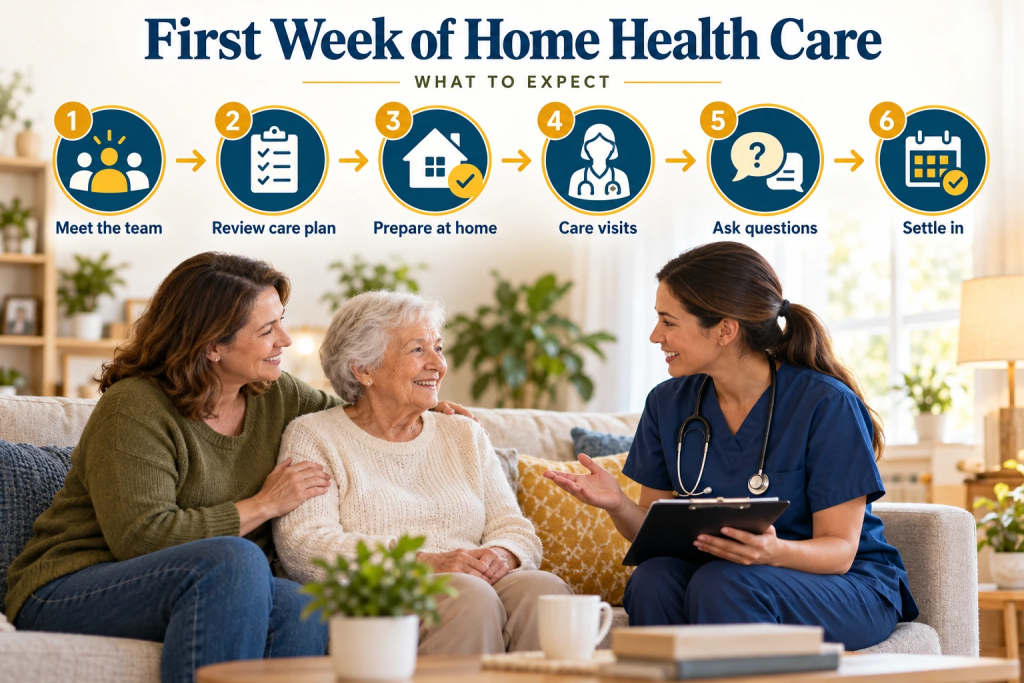
5. Asking Questions and Sharing Concerns
You may think of questions after a care professional has left. Keeping a short list can help you remember what to discuss during the next visit.
Ask whom you should contact if you need clarification about care instructions or scheduled appointments. It’s also helpful to understand how changes in your loved one’s condition should be communicated.
If you notice something different about their health or daily abilities, share those observations with the appropriate care professional. Medical concerns that need prompt attention should be addressed without waiting for the next scheduled visit.
Clear communication also gives your loved one an opportunity to express how they’re feeling about the assistance they’re receiving.
6. Helping Your Loved One Settle Into Their Routine
Your loved one may need time to become familiar with receiving assistance from someone outside the family.
They might prefer keeping their usual morning schedule or completing certain tasks without help. You can encourage them to share these preferences with the visiting professionals.
After a few visits, ask how they’re feeling about the arrangement. Are they comfortable with the activities being provided? Do they have questions they haven’t asked yet?
These discussions can help you understand whether any concerns need to be shared with the care team.
What to Review After the First Week
Once visits are underway, you’ll have a better idea of how your loved one’s care fits into their daily life.
You can review upcoming appointments, discuss any unanswered questions, and check whether your loved one is comfortable with the assistance being provided.
At Buckeye Home Health Care, we work closely with physicians to provide care based on individual needs and medical recommendations. Our team can help clarify the services arranged for your loved one and address questions about their care.
Getting Started With Home Health Care
Preparing for care doesn’t mean you need to know everything beforehand. Start with your loved one’s current needs and the questions you have about receiving assistance at home.
If you’re planning home health care for your loved one and want to understand how to get started, you can get in touch with us so we can discuss their situation and explain what to expect as care begins.
Leave a Reply